
In this article
Best 5 Alternatives to OpenVC for Founders Tired of Manual Investor Outreach and Investors Looking for Verified Startup Discovery

OpenVC is useful when you need a better way to find investors and organize fundraising outreach. But for many founders, it still leaves too much manual work on the table. You may still be spending hours researching investors, figuring out who is actually relevant, chasing cold outreach, and managing follow ups across spreadsheets, inboxes, and scattered notes.
For investors, the issue is different. The challenge is not finding more startups. It is finding better startup opportunities with stronger context, better fit, and less noise.
That is why more founders and investors start looking beyond OpenVC. Some platforms are better for verified founder investor matching. Some are stronger for warm introductions and outreach automation. Others are better for fundraising infrastructure, investor updates, or structured startup discovery.
In this guide, we compare the best alternatives to OpenVC for founders who want a more efficient fundraising process and investors who want more credible startup discovery: The Prime Shark, Gust, EasyVC, AngelList, Visible.vc, and Foundersuite.
Top Alternatives to OpenVC
If you want the shortlist first, these are the strongest OpenVC alternatives to look at:
1) The Prime Shark
Best for founders who want verified investor access, AI powered founder investor matching, and a more curated fundraising ecosystem, and for investors looking for more credible startup discovery rather than cold inbound noise.
2) Gust
Best for founders who need fundraising infrastructure, cap table support, incorporation tools, and startup readiness workflows, and for angel groups that want more structured deal flow and diligence processes.
3) EasyVC
Best for founders who are tired of manually researching investors and chasing cold outreach and want AI based investor matching plus warm intro workflows through portfolio founders.
4) AngelList
Best for founders and investors operating in a venture backed environment who need more than outreach tools, including structured investing workflows, syndicates, SPVs, and startup fundraising infrastructure.
5) Visible.VC
Best for founders who want to run a more polished fundraising process, manage investor pipelines, share decks and data rooms, and stay consistent with investor updates after initial outreach.
6) Foundersuite
Best for founders who want an all in one fundraising workflow platform with investor CRM, investor database access, warm intro support, bulk outreach tools, investor updates, and data room functionality.
Why Founders Outgrow OpenVC Faster Than They Expect
OpenVC can be useful when the main challenge is building an investor list and getting some structure around fundraising outreach. But many founders eventually discover that investor outreach itself is only one part of the fundraising problem.
The harder part is everything around it.
You still need to answer questions like:
Which investors are actually worth spending time on?
A long investor list does not automatically become a high quality target list. Founders still need a way to identify fit, intent, relevance, and actual probability of engagement.
How do you move from cold outreach to real investor conversations?
Even with a database, founders often struggle to create warm paths, credible positioning, and the right sequence of follow up. Outreach becomes a volume game unless the platform helps improve quality.
How do you manage momentum once outreach starts?
Fundraising becomes messy fast when conversations, follow ups, decks, diligence requests, and investor status updates are scattered across spreadsheets, inboxes, and notes.
What happens after an investor says “send me more”?
That is where data rooms, pitch deck analytics, investor updates, diligence materials, startup docs, and relationship management start to matter just as much as the initial outreach list.
This is exactly why many founders start searching for an alternative to OpenVC. They are not always abandoning investor discovery. They are looking for a platform that solves more of the fundraising process from first investor match to actual progress.
What Investors Actually Want Instead of More Random Startup Outreach
From the investor side, the issue is not “there are not enough startups to look at.” The issue is that too much startup discovery still feels unstructured.
Investors typically want some combination of the following:
More signal, less noise
They want startup opportunities that are easier to assess, not just more founder messages in their inbox.
Better founder quality and more credible context
That means stronger profiles, clearer traction signals, better prepared founders, and a platform that makes discovery feel more trustworthy.
Faster evaluation
The easier it is to review a startup’s deck, updates, data room, traction, and context, the more useful the platform becomes for investors.
A platform that helps with relationship building, not just discovery
Investing is rarely about one pitch. It is about repeated exposure, trust, diligence, and timing. The best OpenVC alternatives support that process more effectively than a basic investor list workflow.
The Best OpenVC Alternatives Solve Different Fundraising Problems
Not every OpenVC alternative should be judged on the same criteria. A better way to compare them is to ask what problem they solve best.
If your main problem is investor access quality
You need a platform like The Prime Shark, which focuses on verified founder investor access and curated opportunity discovery rather than just building an outreach list.
If your main problem is startup readiness and fundraising operations
You need something like Gust, which helps with incorporation, equity, fundraising setup, legal workflows, and angel group infrastructure.
If your main problem is manual outreach and cold prospecting
You need a tool like EasyVC or Foundersuite, both of which are built to make investor targeting, intros, and fundraising execution more efficient.
If your main problem is managing the fundraising process after investor outreach begins
You need something like Visible.vc, which is strong on investor pipelines, decks, data rooms, analytics, and investor updates.
If your fundraising is already moving into a more structured venture environment
You may need AngelList, especially if the conversation has shifted toward SPVs, syndicates, venture workflows, or formal investment structures.
6 Better Alternatives to OpenVC Depending on What You Need Next
1) The Prime Shark

The Prime Shark is one of the strongest OpenVC alternatives for founders who are tired of fundraising feeling like a cold outreach project and want something more structured, credible, and relationship driven. Instead of centering the experience around manual investor list building, Prime Shark is built as a verified, AI powered founder investor ecosystem that helps ambitious businesses connect with trusted investors, mentors, and strategic partners in one platform.
For founders, that means the value is not just “here is a list of investors.” It is closer to verified access, smarter matching, strategic support, and cross border opportunity discovery. For investors, Prime Shark is more appealing than a founder led outreach tool because it focuses on curated startup visibility, structured discovery, and trust signals instead of relying purely on inbound founder prospecting.
Best for
Founders who want better investor access without relying entirely on manual outreach
Investors who want more qualified startup discovery inside a curated ecosystem
Startups looking for funding, mentorship, strategic partnerships, and cross border growth support
Why Prime Shark stands out
Prime Shark is not just another investor CRM or investor list tool. It is positioned as a broader capital access ecosystem. That makes it a better fit for founders who want more than a workflow tool and for investors who want better discovery quality.
Pros
Verified founder investor ecosystem instead of a pure outreach database
AI powered matching and structured discovery
Useful for both fundraising and strategic growth relationships
Cross border positioning makes it attractive for globally minded founders and investors
More aligned with relationship led fundraising than spreadsheet led fundraising
Cons
Public pricing is not clearly listed on the website
Not designed as a simple self serve investor database product
Newer platform compared with older fundraising software brands
Key features
AI powered founder investor matching
Verified investor and business discovery
Mentor access and strategic support
Funding opportunities and investor visibility
Cross border ecosystem and partnership access
Pricing
Prime Shark’s pricing is structured around different ecosystem products, including Capital Bridge, Business Exchange, Global Connect, and bundled combo plans.
A) Individual ecosystem plans
The Capital Bridge, Business Exchange, and Global Connect modules appear to follow the same pricing structure:
Free Trial – ₹0 for 15 days
Silver – ₹51.97K / quarter
Gold – ₹77.95K / half year
Premium – ₹1.17L / year
B) Combo plans
Prime Shark also offers bundled plans such as Capital Bridge + Global Connect and Business Exchange + Global Connect, promoted with a 10% combo discount.
One visible combo pricing structure is:
Silver – ₹93.54K / quarter
Gold – ₹1.40L / half year
Premium – ₹2.10L / year
2) Gust
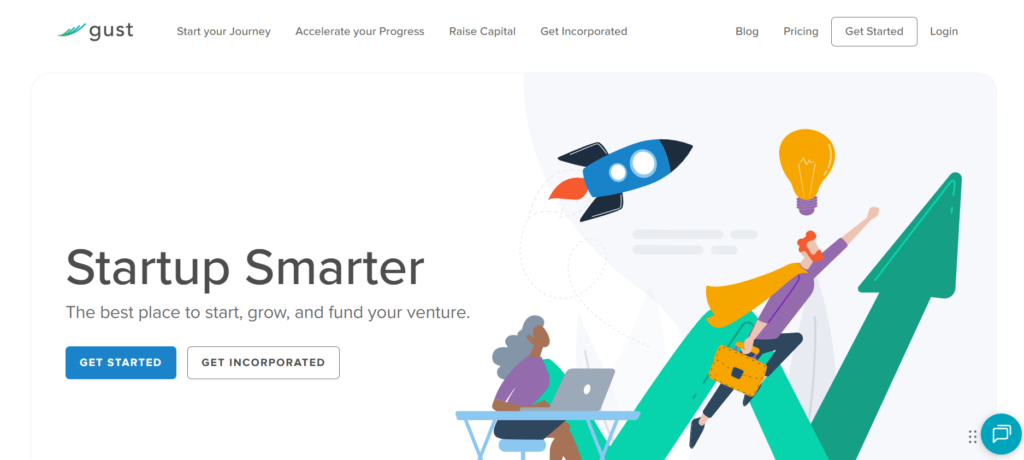
Gust is a very different kind of OpenVC alternative because it is less about investor outreach and more about fundraising infrastructure. If OpenVC helps founders build investor lists and manage outreach, Gust helps founders build the company and fundraising setup behind the raise itself. That includes incorporation, cap table management, founder stock issuance, SAFE creation, convertible notes, and option plan support.
Gust also has a long history serving angel groups and early stage capital organizations, which makes it more useful than OpenVC when the problem is not simply “how do I reach investors?” but “how do I run fundraising and investor processes more professionally?”
Best for
Founders who need startup formation, cap table, and fundraising infrastructure
Startups preparing for a formal fundraise rather than just early outreach
Angel groups and investor organizations that want structured deal intake and diligence workflows
Why Gust stands out
Gust solves a more operational problem than OpenVC. It is useful when the bottleneck is not investor discovery but the legal, equity, and fundraising systems needed to support a serious round.
Pros
Strong startup infrastructure layer
Useful for fundraising readiness and legal workflows
Good fit for angel groups and organized investor communities
Supports cap table management, SAFEs, notes, and option planning
Cons
Not primarily an investor discovery platform
Less useful if your immediate problem is outbound investor outreach
Public pricing is tied to startup operations rather than investor access
Key features
Delaware incorporation and post incorporation setup
Digital cap table management
SAFE and convertible note workflows
Founder stock issuance and 83(b) support
Option plan and fundraising readiness support
Angel group deal flow and diligence tools
Pricing
Gust’s public startup pricing currently includes:
Start: $450/year
Accelerate: $1,250/year
Raise: $3,500/year
3) EasyVC
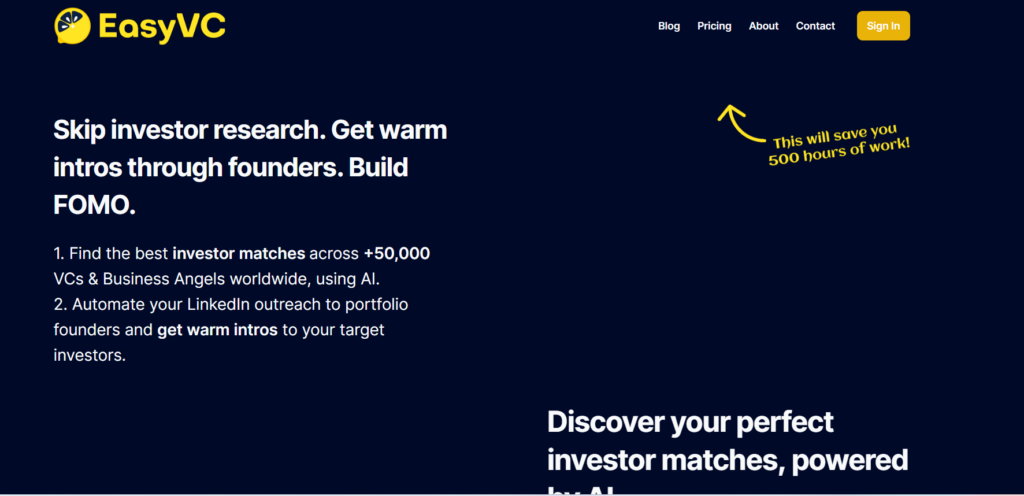
EasyVC is one of the most relevant alternatives to OpenVC if your biggest frustration is still the amount of manual work involved in investor outreach. The platform is built specifically for founders who want to skip a large part of manual investor research, find better investor matches with AI, and increase the odds of getting warm introductions instead of relying on cold outreach alone.
What makes EasyVC different is that it does not stop at investor matching. It also emphasizes portfolio founder outreach as a warm intro strategy. In practice, that means a founder can use EasyVC to identify relevant investors, then automate LinkedIn outreach to founders in those investors’ portfolio companies to ask for introductions. That makes it a particularly strong fit for first time fundraisers, founders without strong VC networks, and teams that want to systemize warm outreach rather than just collect investor names.
Best for
Founders who are tired of manually researching investors
Startups that want to improve warm intro generation through founder networks
Teams that want AI based investor matching plus outreach workflow support
Why EasyVC stands out
EasyVC is built around a very specific fundraising pain point: the time sink of manual investor research and cold outreach. Its value is in combining investor discovery, warm intro workflows, contact access, and fundraising pipeline management into one founder focused tool.
Pros
Strong fit for founders without an existing investor network
AI based investor matching helps reduce research time
Warm intro workflow through portfolio founders is a distinctive angle
Includes outreach automation, investor contact data, and fundraising pipeline tools
Built specifically around active fundraising rather than passive startup discovery
Cons
More founder outreach focused than investor marketplace focused
Less useful for investors who want curated startup discovery on platform
Pricing is higher than some entry level fundraising tools once you move beyond trial usage
Key features
AI based investor matching
Investor database and investor contact details
Portfolio founder outreach workflows for warm intros
LinkedIn outreach automation via Chrome extension
Fundraising AI agent
Investor pipeline and portfolio founder pipeline management
Custom tags and fundraising organization tools
Pricing
EasyVC currently offers:
Monthly Plan: $119.99/month
Includes 25 AI based investor matches per month, 400 portfolio founders to outreach, outreach automation, investor contact access, fundraising AI tools, and pipeline access.
Pro Plan: $89.99/month billed annually
Includes unlimited AI based investor matches, unlimited founder outreach, coaching sessions with EasyVC founders, CSV exports, outreach automation, and full platform access.
4) AngelList
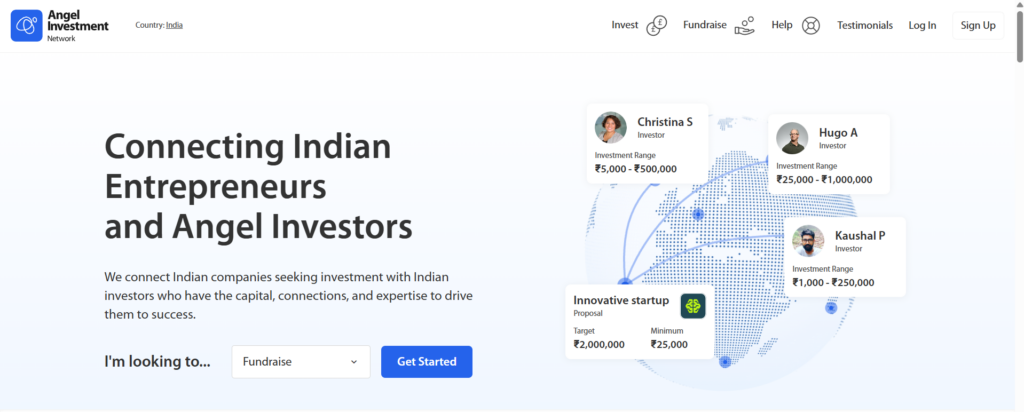
AngelList is not the closest OpenVC replacement if your only goal is investor outreach. But it becomes highly relevant when your fundraising process is moving beyond outreach and into a more structured venture ecosystem. AngelList is much stronger than OpenVC when the real need is SPVs, syndicates, startup incorporation, venture fund workflows, and formal private market investing infrastructure.
That makes it more useful for founders who are already operating in a venture backed environment and for investors or syndicate leads who need structured deal execution rather than just startup discovery tools.
Best for
Founders raising inside a venture backed ecosystem
Investors, syndicate leads, and fund managers running structured investment vehicles
Teams that need more than investor outreach software and want formal venture infrastructure
Why AngelList stands out
AngelList solves a different layer of the fundraising and investing stack. It is not primarily an investor CRM tool. It is a venture infrastructure platform.
Pros
Strong brand and network in the startup investing ecosystem
Useful for SPVs, syndicates, and venture fund administration
More relevant than OpenVC once fundraising becomes more structured
Can support both startup side and investor side venture workflows
Cons
Not the most direct solution for founders who simply want better outreach workflows
Pricing is product specific rather than simple founder plan pricing
Can be overkill for very early stage founders just building an investor list
Key features
SPV creation and administration
Syndicate and fund infrastructure
Startup incorporation and venture fundraising workflows
Investor and LP management tools
Private market investing support
Pricing
AngelList pricing depends on the product being used, but public SPV pricing includes:
SPV setup fee: $8,000
Blue sky/state regulatory fee: $2,000
Follow on SPV setup fee: $5,000 in some cases
5) Visible.vc
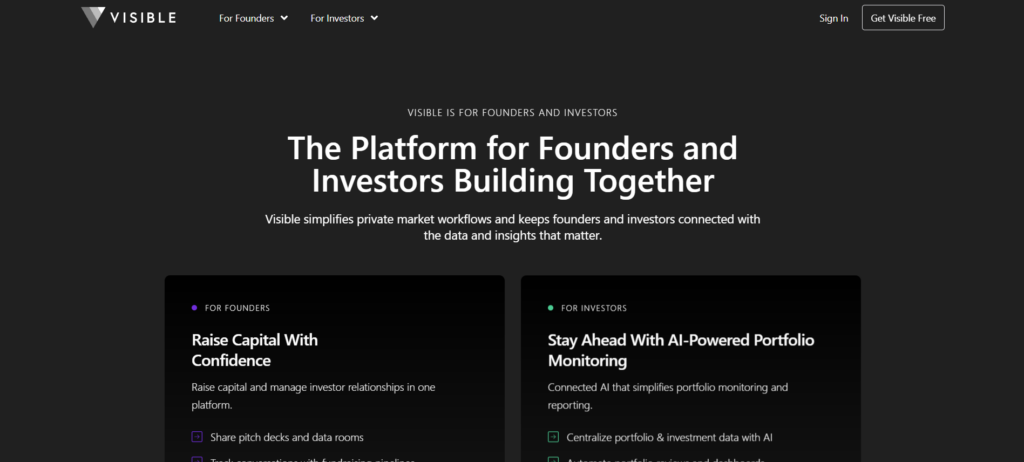
Visible.vc is a smart OpenVC alternative for founders who already know that investor outreach is only one part of fundraising. It is especially strong for founders who want to run a more polished investor process from first conversation through ongoing investor communication. Instead of focusing mainly on investor discovery, Visible combines investor database access with fundraising pipelines, pitch deck sharing, data rooms, dashboards, and investor updates.
That makes Visible particularly useful for startups that want to look more prepared and stay organized once investor interest starts building. It also has a meaningful investor side product focused on portfolio monitoring, reporting, and AI powered portfolio workflows, which makes it more interesting than a pure founder outreach tool if you want a platform that understands both sides of the relationship.
Best for
Founders who want a cleaner fundraising workflow after initial outreach begins
Startups that want investor updates, deck analytics, data rooms, and KPI dashboards in one place
Investors and venture firms that care about portfolio monitoring and structured reporting
Why Visible stands out
Visible is not just about finding investors. It is about helping founders manage investor relationships professionally over time and helping investors stay connected to portfolio performance.
Pros
Strong post outreach fundraising workflow
Useful for investor updates, dashboards, and ongoing investor communication
Includes data rooms, deck sharing, and fundraising pipelines
Has founder and investor product lines, making it relevant on both sides of the market
Free entry plan available for founders
Cons
Less focused on warm intro generation than EasyVC or Foundersuite
Not positioned primarily as a verified founder investor matching ecosystem
Can become more expensive as founders need advanced analytics and more fundraising infrastructure
Key features
Investor database via Visible Connect
Fundraising pipelines
Pitch deck hosting and analytics
Data rooms
Investor updates and dashboards
KPI and reporting tools
Portfolio monitoring tools for investors
Pricing
Visible’s founder pricing currently includes:
Base: $59/month billed annually or $69/month billed monthly
Core: $129/month billed annually or $149/month billed monthly
Growth: $199/month billed annually or $249/month billed monthly
6) Foundersuite
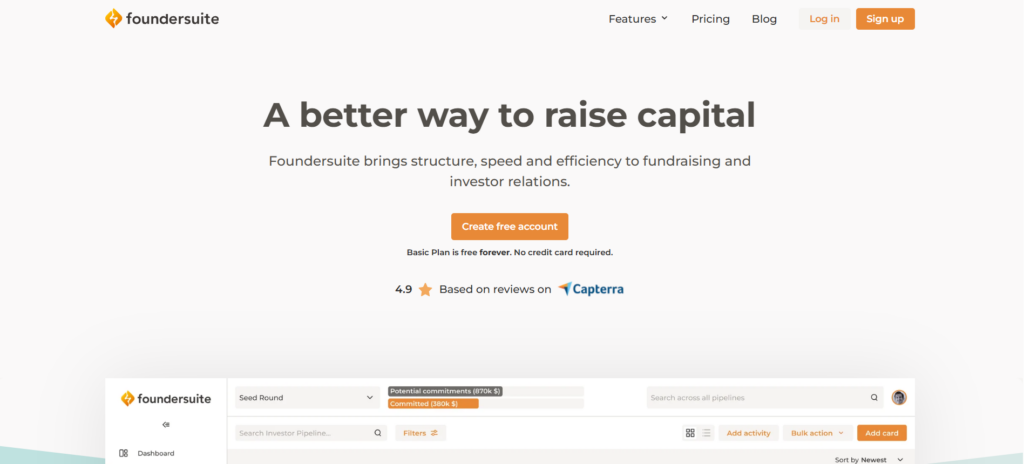
Foundersuite is one of the closest alternatives to OpenVC in terms of how founders actually use it day to day. It is built as an all in one fundraising operating system with a large investor database, investor CRM, intro workflows, bulk email tools, pitch deck hosting, investor updates, and data room support. If OpenVC helps founders run a more organized fundraising process, Foundersuite tries to do that too, but with a broader set of fundraising execution tools layered on top.
One of Foundersuite’s strongest selling points is how much of the fundraising workflow it tries to keep inside one system. You can search a large investor database, add investors to a CRM, request warm intros, send a pitch deck, follow up with personalized emails, keep investors updated, and run diligence through a virtual data room.
Best for
Founders who want an all in one fundraising workflow platform
Startups that want investor CRM, warm intro tools, outreach, updates, and diligence support in one place
Teams that want more fundraising process structure than a simple investor list provides
Why Foundersuite stands out
Foundersuite is one of the more complete fundraising workflow tools for founders who want to do investor discovery, outreach, follow up, updates, and diligence management without stitching together multiple products.
Pros
Large investor database with contact access
Investor CRM plus warm intro functionality
Bulk email, investor updates, and pitch deck hosting included
Data room and startup docs support help beyond initial outreach
Free plan available
Cons
Can feel feature heavy for founders who only want simple investor discovery
Investor side value is weaker than ecosystem platforms built for both founders and investors
Pricing on higher plans can add up depending on the stage of fundraising
Key features
Investor database with 200k+ investors
Investor CRM
Get Intro feature
Pitch deck hosting
Personalized bulk email
Investor updates
Data room add on
Docs, templates, and fundraising resources
Pricing
Foundersuite currently offers:
Silver: $745 billed annually
Gold: $1,069 billed annually
Platinum: $1,609 billed annually
OpenVC Alternatives Compared at a Glance
| Platform | Best For | Strongest Use Case | Founder Fit | Investor Fit | Pricing Snapshot |
| The Prime Shark | Founders who want better investor access and investors looking for more credible startup discovery | Verified founder investor matching, curated discovery, strategic fundraising ecosystem | Excellent for founders who want more than manual outreach | Strong for investors who want better startup discovery quality | Individual plans start with 15 day free trial, then Silver ₹51.97K/quarter, Gold ₹77.95K/half year, Premium ₹1.17L/year; combo plans from ₹93.54K/quarter |
| Gust | Founders who need startup infrastructure and investor organizations managing deal flow | Incorporation, cap tables, SAFE workflows, fundraising readiness, angel group operations | Strong for fundraising setup and company readiness | Strong for angel groups and organized early stage investors | Start $450/yr, Accelerate $1,250/yr, Raise $3,500/yr |
| EasyVC | Founders tired of manual investor research and cold outreach | AI investor matching, warm intros through portfolio founders, outreach automation | Excellent for active fundraisers who want to save time on outreach | Limited investor side marketplace value | Monthly $119.99, Pro $89.99/mo billed annually |
| AngelList | Founders and investors operating in venture backed environments | SPVs, syndicates, venture infrastructure, formal investment workflows | Strong once fundraising becomes more venture structured | Very strong for syndicates, SPVs, and venture investors | SPVs from $8k setup + fees |
| Visible.vc | Founders who want better fundraising execution after outreach begins | Investor updates, decks, pipelines, data rooms, dashboards | Strong for investor relationship management and fundraising process control | Strong for VC portfolio monitoring and reporting | Free plan, paid founder plans from $59/mo annually |
| Foundersuite | Founders who want an all in one fundraising workflow system | Investor CRM, investor database, warm intros, bulk outreach, updates, diligence tools | Excellent for founders who want one platform for the full fundraising workflow | More founder oriented than investor oriented | Free Basic, paid plans from $745/yr |
Which OpenVC Alternative Is Best for Your Fundraising Bottleneck?
A good way to choose an OpenVC alternative is to stop asking “Which one is best overall?” and ask “Which one solves the thing slowing me down right now?”
If you are tired of investor outreach feeling like a spreadsheet job
Look at EasyVC or Foundersuite.
These are the strongest options when the problem is still prospecting, targeting, intros, follow ups, and keeping investor outreach organized at scale.
If you want better investor access rather than better cold outreach
Look at The Prime Shark.
It is the strongest fit when the real issue is not workflow efficiency, but access quality, trust, and better founder investor alignment.
If you are fundraising but the company is not structurally ready
Look at Gust.
It is more useful than OpenVC when the bottleneck is cap tables, legal setup, SAFE workflows, or fundraising infrastructure.
If you already have investor interest and need to look more polished
Look at Visible.vc.
It helps with investor updates, data rooms, dashboards, deck sharing, and staying organized once fundraising conversations are active.
If your round is moving into formal venture structures
Look at AngelList.
It becomes more relevant when the fundraising or investment process involves SPVs, syndicates, or broader venture operations.
The Biggest Difference Between OpenVC and These Alternatives
OpenVC is mainly a founder fundraising workflow and investor discovery tool. That is useful, but it also means most of the value is centered on helping founders run outbound fundraising more effectively.
The alternatives in this list go in different directions:
Prime Shark shifts the focus toward verified investor access and ecosystem trust
It is a stronger fit when founders want more credible investor access and investors want more structured startup discovery.
Gust shifts the focus toward fundraising infrastructure
It matters more when the challenge is startup readiness, legal workflows, and equity management.
EasyVC and Foundersuite go deeper into fundraising execution
They are better fits when the pain is manual investor prospecting, warm intros, and fundraising workflow management.
Visible.vc goes deeper into investor relationship management
It helps founders look more prepared after outreach begins and gives investors better reporting and visibility over time.
AngelList moves up the stack into venture operations
It becomes relevant when startup fundraising overlaps with SPVs, syndicates, and formal venture execution.
FAQs
1) What is the best alternative to OpenVC for founders?
It depends on what problem you are trying to solve. If you want better investor access and a more curated fundraising ecosystem, The Prime Shark is one of the strongest alternatives. If you want help reducing manual outreach and investor research, EasyVC and Foundersuite are strong options.
2) Which OpenVC alternative is best for founders tired of manual investor outreach?
EasyVC and Foundersuite are especially strong for founders who want to spend less time on investor research, list building, intros, follow ups, and fundraising admin.
3) Which OpenVC alternative is best for investors looking for verified startup discovery?
The Prime Shark is one of the strongest options in this list for investors who want more structured startup discovery, curated opportunities, and a better signal to noise ratio than founder led cold outreach workflows.
4) Is Gust a direct alternative to OpenVC?
Not exactly. Gust solves a different problem. It is more about startup formation, cap tables, fundraising infrastructure, and angel group operations than investor outreach.
5) Is Visible.vc better than OpenVC?
Visible.vc can be a better fit if your fundraising challenge is no longer investor discovery, but managing decks, data rooms, investor updates, and investor relationships once fundraising is underway.
6) Is AngelList an OpenVC replacement?
AngelList can be an alternative, but mostly for founders and investors operating in a venture backed environment who need SPVs, syndicates, or formal investing infrastructure rather than just investor outreach workflows.
7) Is Foundersuite similar to OpenVC?
Yes, Foundersuite is one of the closer OpenVC alternatives because it also focuses heavily on the founder fundraising workflow. The difference is that Foundersuite adds a broader mix of CRM, bulk email, pitch deck hosting, investor updates, and diligence support.
8) Which OpenVC alternative is best if I need warm introductions?
If warm intros are a priority, EasyVC and Foundersuite are two of the strongest options in this list because both include intro focused workflows rather than relying only on direct cold outreach.